
Underwriting review: Fundo’s Underwriting Team
Last updated: October 2026
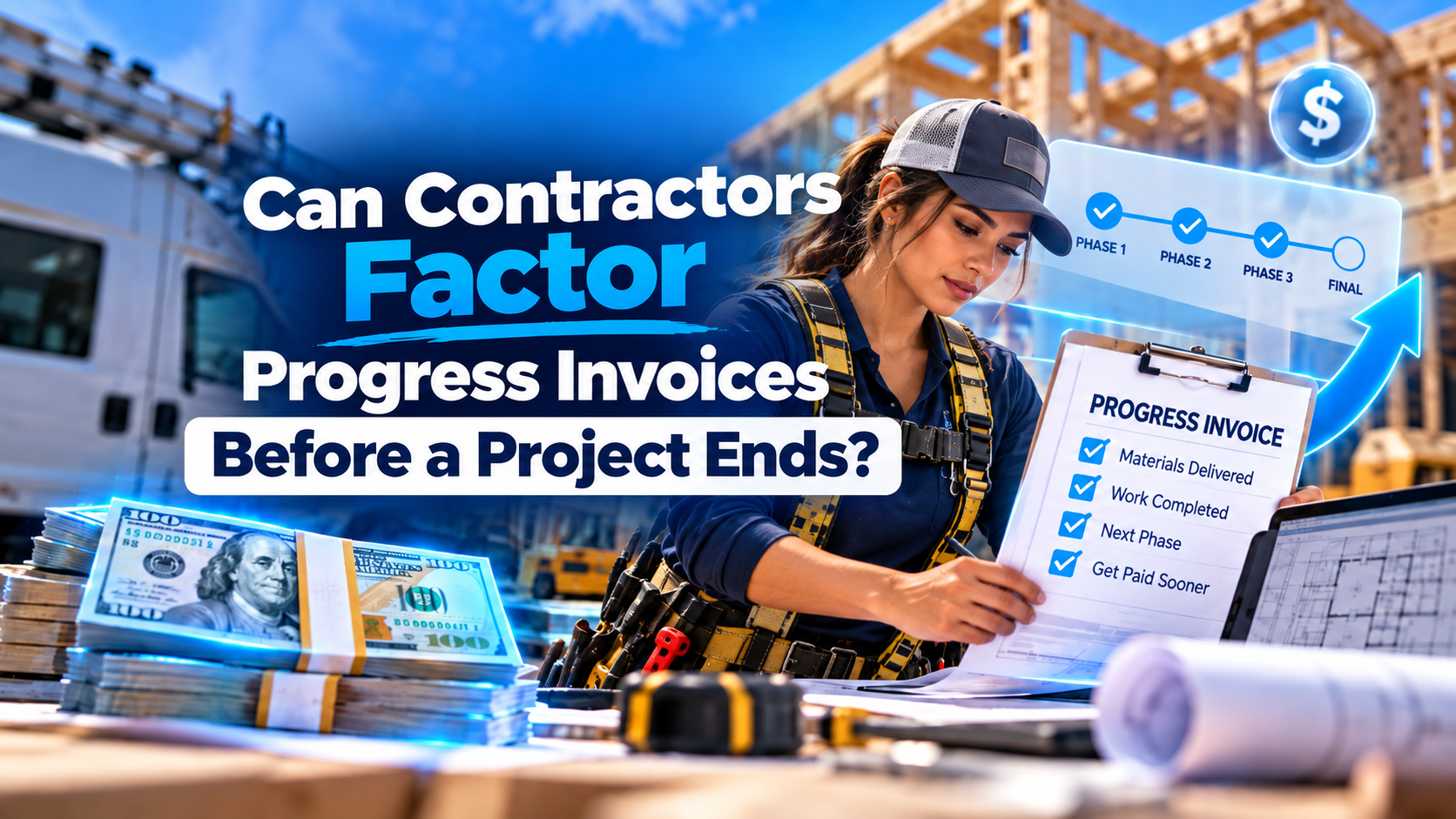
Yes. Invoice factoring for contractors can provide cash for a finished, approved stage of work before the whole project ends. The factor must accept construction progress billings. It checks the bill, the contract, and whether your client can pay. Disputes or contract terms may block funding. Retainage can also cut the sum you receive.
Say your crew has finished the rough-in, and the general contractor has approved the bill. Yet payday comes before the invoice is due. That is the kind of gap progress invoice factoring may help close.
For a plan that covers each stage of the job, start with our guide to funding a new contract before getting paid.

How does invoice factoring for contractors work mid-project?
A signed contract shows work you plan to do. A progress invoice bills for work already done. The factor checks both, along with proof that the client accepts the bill.
With contractor invoice factoring, you sell an eligible unpaid invoice to a factoring company. You get part of its value upfront. The client then pays the factor under the agreed terms. Once the client pays, you get the rest. The factor first takes out its fees and any other sums you owe under the agreement.
Does the client owe you for that stage of work? That is what counts. The full job may still have months to go.
A pay application is a request for payment. Sending it does not mean the client has signed off. The factor may need proof that the bill is approved and a clear due date. It may also check your schedule of values. This lists the cost of each part of the job.
If the work has not started, explore ways contractors can finance materials before a job starts. A quote for future work is not the same as an approved invoice.
A $10,000 progress bill may not mean $10,000 to factor
Two separate holdbacks can affect the cash you receive:
- Retainage: Money the client holds under the project contract, often until a later milestone or final completion.
- Factoring reserve: Cash the factor holds from the bill it buys. It pays you the rest after the client pays, less fees and other agreed charges.
Here is a made-up example. Say the factor agrees to buy the current bill and pay 80% of it upfront.
| Where the money sits | Example amount |
|---|---|
| Approved work billed | $10,000 |
| Retainage held by the client | $1,000 |
| Current invoice amount accepted by the factor | $9,000 |
| 80% advance, before any upfront fees | $7,200 |
| Reserve held by the factor, before fees | $1,800 |
When the client pays the $9,000, the factor settles the $1,800 reserve under its terms. The $1,000 held by the client still follows the job contract. It is outside this factoring example.
These figures explain the math. They are not standard rates or a Fundo offer.
What could stop a progress invoice from qualifying?
Construction invoice factoring calls for a firm that accepts the risks and pay terms of building jobs. Not every factor does.
Before you seek a quote, pull together the contract, bill, work sign-off, and any approved change orders. Show the due date. List any sums the client disputes or holds back.
Then check three things:
- Who owes the money? The factor checks the client’s credit and record of paying bills. Be clear whether that is the owner or the general contractor.
- What must happen before you get paid? Unmet contract terms, disputes, and extra work without sign-off can affect which bills the factor accepts.
- Who else has a claim? Share details of liens, invoices already sold, and other funding agreements. The factor needs to check who has rights to the money.
Do not count on factoring to settle a dispute about the work. A bill can go unpaid for reasons beyond a slow pay cycle.
Ask for the cost if your client pays late
The cash you get upfront is only half the decision. Ask for a full list of fees in writing. Then ask what you would pay if the client were 30 or 60 days late.
Also ask: “If my client does not pay, what would I owe?”
With recourse factoring, you may have to repay the advance or buy back the invoice. Non-recourse terms can still leave you on the hook for disputes and other risks. Read which losses the agreement covers.
Your supply bills matter, too. If they fall due first, review how net 30 supplier terms work for contractors. A late check from your client does not give you more time to pay your supplier.
Where does Fundo fit if you need cash between job payments?

Fundo provides Revenue-Based Financing for business use. The Fundo program described here is separate from invoice factoring. Applying to Fundo is not a request to sell a progress invoice.
Fundo’s basic requirements include:
- At least $1,500 in average monthly business revenue.
- At least three months in business, with consistent bank account activity.
- Eligibility for sole proprietors and independent contractors, including 1099 earners.
- Personal checking accounts accepted in qualifying cases.
Fundo lists funding amounts from $500 to $10,000, subject to underwriting and approval. See the full Fundo eligibility requirements before applying.
Fundo reviews business revenue, deposits, cash flow, balances, and what you already owe. Its bank account underwriting guide explains that review. Meeting the basic rules does not mean you will be approved or get a set amount.
Two questions worth asking before you commit
Can I get funding against an invoice for completed work before the entire project is finished?
Yes, if a factor accepts the progress invoice and its pay terms. Finished work alone is not enough. The factor must check the amount owed and the client who will pay.
Will my client know I factored the invoice?
Often, yes. The factor may call your client to check the bill and ask them to pay a new account. Ask how this works before you sign. Your client needs to know where to send the money.
Put the next phase on a clear cash plan
Start with the amount you need and the date you need it. Then compare the net cash each option provides, its full cost, and what happens if the job payment slips.

Need funds for crew costs, supplies, or the next phase?
Apply for Fundo Revenue-Based Financing to see whether your business qualifies. All funding is subject to underwriting and approval.
Disclaimer:
Fundo offers Revenue Based Financing programs exclusively for business use. Any references to loan products, consumer products, or other financing forms are solely for marketing and educational purposes, aiming to differentiate Fundo's product from other similar financing options in the market.
